

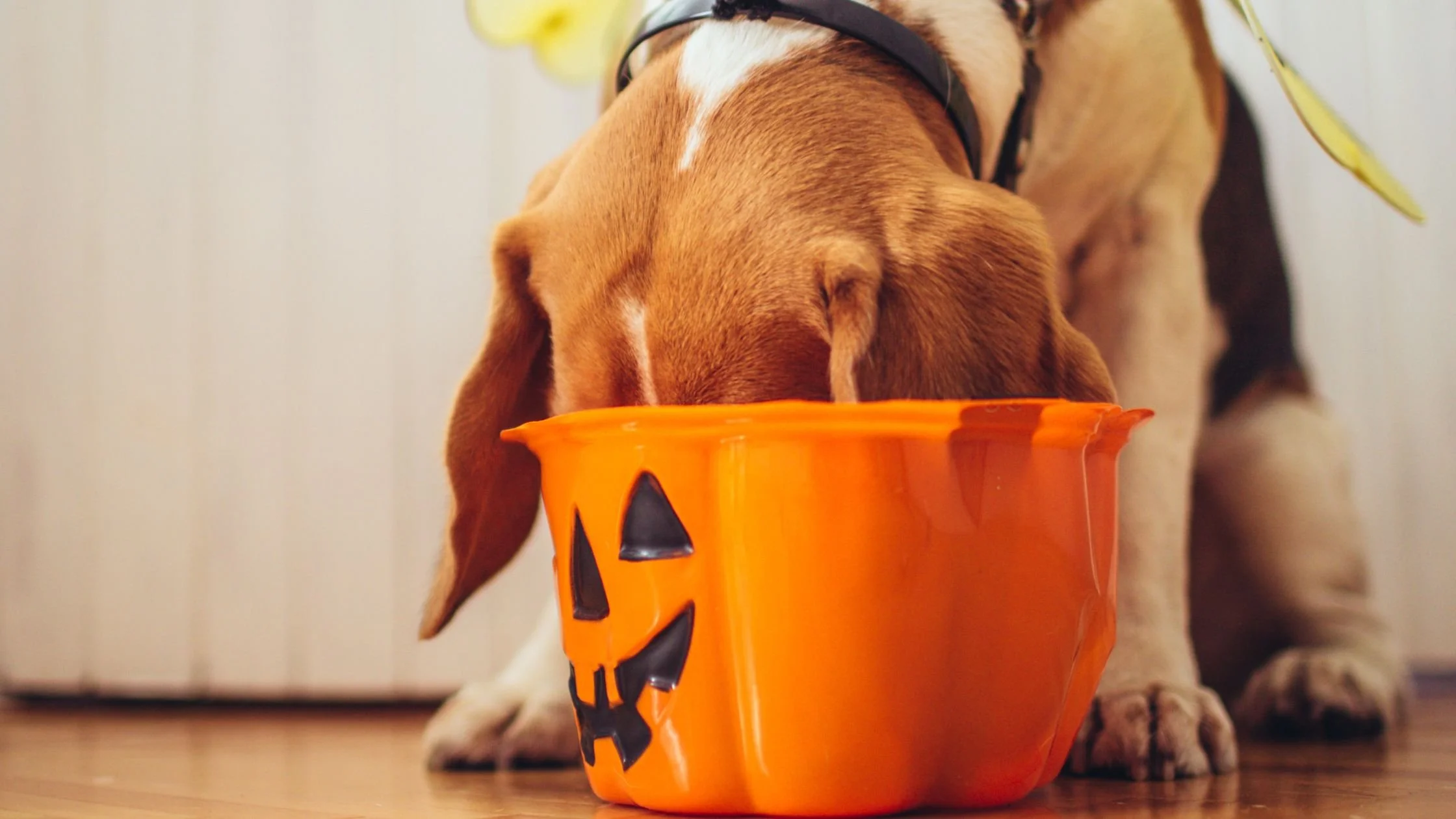
Yes, several things in your Halloween candy bowl can genuinely hurt your dog. Chocolate, especially dark and baking chocolate, contains theobromine, which dogs can't process well and which can cause vomiting, a racing heart, tremors, or seizures depending on the amount. Xylitol, the sugar substitute in many sugar free candies and gums, is even more dangerous. It can cause a dog's blood sugar to crash within 30 to 60 minutes and can lead to liver failure. Wrappers and hard candies are choking and blockage risks too. If your dog gets into the candy bowl, call your vet or the ASPCA Animal Poison Control Center (888-426-4435) right away rather than waiting to see what happens.
How Much Chocolate Is Actually Dangerous?
It depends on the type of chocolate and your dog's size, but even a small amount of dark chocolate can be a problem for a small dog.
Milk chocolate: toxic doses start around 1 ounce per 10 pounds of body weight, but it takes more to cause serious harm than dark chocolate.
Dark or baking chocolate: far more concentrated. A 20 pound dog eating just one ounce of baking chocolate is in the danger zone.
Cocoa powder and cocoa mulch: also concentrated enough to cause serious problems in small amounts.
The ASPCA has a helpful chocolate toxicity guide worth bookmarking before Halloween, not after (link to ASPCA.org).
What About Xylitol?
Xylitol is one of the fastest acting toxins we see in dogs, and it hides in things people don't expect: sugar free gum, some peanut butters, breath mints, and low sugar candy.
Signs show up quickly, often within an hour:
Vomiting
Weakness or wobbliness
Loss of coordination
Seizures in severe cases
If you even suspect your dog got into something with xylitol, treat it as an emergency. Don't wait for symptoms.
How Do I Keep My Dog Safe on Halloween Night in Conroe, Willis, and east Montgomery?
Keep the candy bowl up high, keep your dog away from the front door, and consider a calmer setup for trick or treat night itself.
The doorbell ringing every few minutes for hours is stressful for a lot of dogs, and it's also when most escape attempts and candy grabs happen. A few things that help:
Set up a gated area or a back room away from the front door with a bed, water, and something to chew on.
Skip the costume if your dog seems miserable in it. Not every dog needs to dress up.
Double check your dog's collar has an ID tag and that their microchip info is current, in case a door gets left open during the chaos.
If your dog gets genuinely anxious around groups of loud, costumed strangers, a day of daycare or an evening pet sitting visit on Halloween itself can be a much calmer option than a night of doorbell chaos.
FAQ
My dog ate one M&M, do I need to call the vet?
For most dogs, one small piece of milk chocolate is unlikely to cause serious harm, but it depends on your dog's size. A 5 pound Chihuahua and a 70 pound Lab are very different cases. When in doubt, call your vet or ASPCA Poison Control and give them the weight of your dog and the type and amount of chocolate.
Is xylitol toxic to cats too?
Cats seem less prone to xylitol toxicity than dogs, but it's still smart to keep any sugar free products away from all pets.
What if my dog ate a candy wrapper?
Watch for vomiting, not eating, or straining to go to the bathroom over the next 24 to 48 hours, which can signal a blockage. Call your vet if you notice any of these.
Are pumpkin treats safe for dogs?
Plain, unseasoned canned pumpkin (not pumpkin pie filling) is actually fine for most dogs in small amounts and can even help with digestion. Just skip anything with added sugar, spices, or nutmeg.
What should I do if my dog seems anxious during trick or treating?
Set up a quiet space away from the door, or consider a pet sitting visit or daycare day so they're not home for the doorbell marathon.