

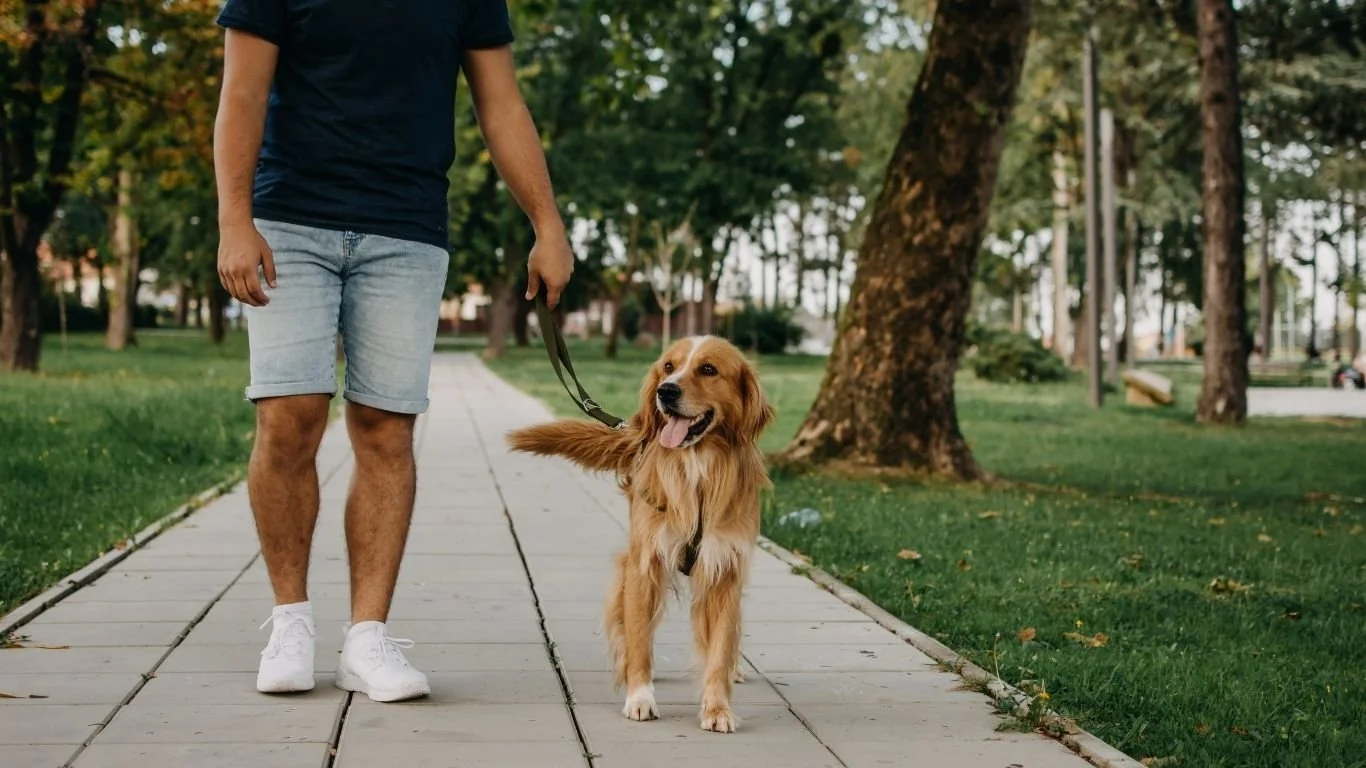
We hear this a lot from new clients around Conroe and Willis: "My dog has a big backyard, so he gets plenty of exercise." We understand the logic, and we know how much easier it feels to just open the back door and let your dog loose for a while. But after years of walking dogs across Montgomery County, we can tell you with confidence that a yard, no matter how big, is not a substitute for a real walk. Here is why daily walks matter so much more than most people realize, and what your dog is actually missing out on without one.
A yard is exercise. A walk is an experience.
Dogs left alone in a backyard tend to develop a predictable pattern. They patrol the fence line a few times, sniff the same spots they sniffed yesterday, maybe chase a squirrel if one shows up, and then settle into a shady spot to wait. It is exercise in the loosest sense, but it is not mentally engaging. A walk, on the other hand, exposes your dog to new smells, new sounds, and new sights every single time, even if you walk the same route. That mental stimulation is just as tiring, in a good way, as the physical activity itself. A dog who gets a proper walk tends to settle down at home more easily, because their brain has actually been worked, not just their legs.
Sniffing is not a distraction, it is the point
If you have ever tried to hustle your dog past every mailbox and fire hydrant, we get it, but consider letting them slow down and sniff more than you think they need to. A dog's sense of smell is their primary way of understanding the world, somewhere between ten thousand and one hundred thousand times more sensitive than a human's. Every sniff is essentially your dog reading the news: who walked by, what they ate, whether another dog marked that spot yesterday. Giving your dog time to sniff during a walk is a form of enrichment that a backyard, with its familiar and unchanging scent map, simply cannot offer.
Walks reduce problem behaviors at home
A surprising number of behavior issues, including excessive barking, destructive chewing, and restlessness, trace back to a dog that is simply not getting enough physical and mental output. Owners often assume their dog is just "high energy" or "stubborn," when the real issue is a lack of consistent daily movement paired with new stimulation. We have watched dogs settle into calmer, happier routines within a couple of weeks of adding regular walks to their schedule, sometimes even when the yard access stayed exactly the same as before.
Socialization matters more than people expect
Regular walks give your dog controlled, low pressure exposure to the world: other dogs on leash, neighbors out mowing their lawns, delivery trucks, kids on bikes. This kind of ongoing, mild exposure helps dogs stay confident and well adjusted rather than reactive or anxious when they do encounter something unfamiliar. A dog who only ever experiences their own backyard can become more nervous or overly excited when they finally do leave the property, simply because the outside world feels unfamiliar and overwhelming.
Walks support weight management and joint health
Backyard time tends to involve short bursts of activity followed by long stretches of lying around. A structured walk provides sustained, low impact movement that is genuinely good for a dog's cardiovascular health and joints, especially as they get older. Keeping a dog at a healthy weight through consistent activity is one of the simplest ways to extend their quality of life and reduce the risk of joint problems down the road.
It strengthens your bond, even when someone else is holding the leash
We talk to a lot of pet parents who feel guilty hiring a dog walker, as though it means they are outsourcing their relationship with their pet. It is actually the opposite. A well exercised, mentally satisfied dog is a more relaxed and affectionate companion during the time you do spend together. Instead of coming home to a dog bouncing off the walls with pent up energy, you come home to a dog who is calm, content, and genuinely glad to see you, ready to curl up on the couch instead of demanding an hour of fetch first.
What this looks like day to day
A daily walk does not need to be complicated or long. Even fifteen to twenty minutes of purposeful walking, with time to sniff and explore, makes a real difference over the course of a week. For working pet parents across Conroe, Willis, and the surrounding area, this is exactly why regular dog walking visits exist. It is not about replacing your relationship with your dog, it is about filling in the gaps during the hours you cannot be home, so your dog gets consistent movement, mental engagement, and a friendly face checking in, rain or shine.
If your dog has been relying on backyard time alone, consider this your gentle nudge to add a walk to the routine. Your dog's body, brain, and behavior will thank you, and so, eventually, will your couch cushions. We would love to build a walking schedule around your dog's needs and your family's routine. Reach out anytime to get started.